
From a child’s very first sounds to their earliest words, music plays a remarkable role in shaping speech and language while helping them connect and communicate with the world. Through engaging early childhood music classes, young learners strengthen early communication skills and confidence through singing, movement, rhythm, and playful interaction.
In this blog, we explore how high-quality early childhood music and movement experiences support early speech and overall learning and how hey dee ho’s specialised programs create meaningful moments of connection for children and educators who support them.
How Music Supports Speech & Language Development
Singing, rhythmic patterns, repetition, and movement all support core areas of early speech development from auditory processing and memory to phonological awareness and vocabulary. In fact, a 2020 study found that children who attended weekly music classes improved their phonological awareness compared to their peers who attended visual arts classes.
Early Childhood Music Classes: More Than Just a Fun Activity
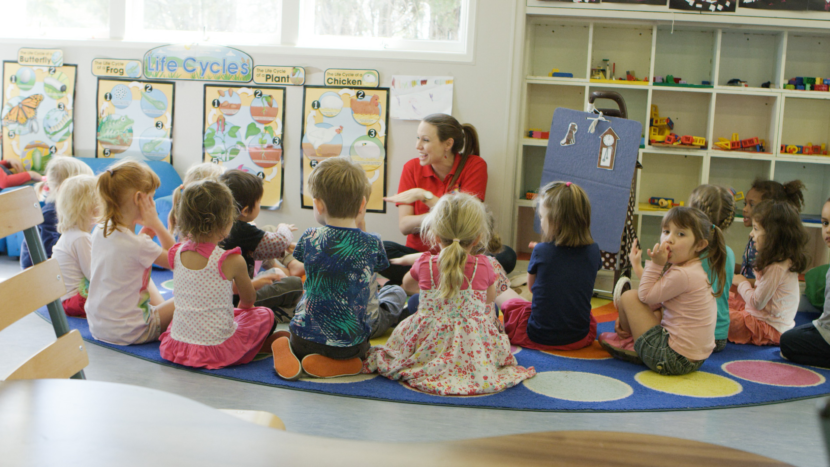
Quality early childhood music classes actively support cognitive, emotional, and social development. Our presenters bring each session to life through singing, storytelling, movement, and Auslan signing, all designed to build strong communication foundations.
Here’s how children learn through music and movement in early childhood:
1. Singing Supports Speech Development
Songs with repetition, rhythm, and simple phrases help children develop their mouth movements, improve pronunciation, and expand vocabulary.
During a “hello song,” toddlers eagerly repeat the presenter’s gestures and simple words. Even quieter children often join in because the rhythm gives them confidence, a small but meaningful milestone that educators love observing.
2. Movement Builds Memory & Language
Music and movement early childhood activities encourage children to follow instructions, respond to cues, and express meaning through their bodies.
A child spinning, stretching, or clapping to the beat is not “just playing”; they’re building neural connections that support language processing and self-regulation.
3. Storytelling Strengthens Comprehension
Music and movement in early childhood education become even more powerful when paired with narrative. Props, puppets, and imaginative themes give children concrete references to understand new words.
After a session, most educators note that children repeating story characters and actions throughout the day is a sign that learning has sunk in deeply.
Supporting Educators Through Play-Based Music Learning
High-quality early childhood music and movement programs don’t just enrich children’s development; they make life easier for educators, too.
Each session is designed to align with EYLF outcomes and centre routines, giving educators practical tools they can use every day. These include language-rich songs for transitions, simple behaviour-regulation strategies, multimodal communication techniques such as Auslan-supported activities, and opportunities to observe each child’s confidence, communication style and social interaction.
Many educators share that music with preschoolers helps them better understand children who are still developing speech, learning English, or communicating nonverbally.
Early Childhood Music Therapy Concepts, Without Calling It Therapy
While hey dee ho doesn’t provide early childhood music therapy, many of the techniques used in classes are grounded in well-researched principles such as using rhythm to support emotional regulation, repetition to build memory, and movement to reinforce emerging vocabulary.
These approaches are especially supportive for children who are shy, developing speech, learning multiple languages, or who thrive with sensory-rich learning experiences.
How hey dee ho Programs Bring Music, Speech & Language Together
Across Australia, New Zealand, and the United Kingdom, our early childhood music development programs are carefully crafted to spark curiosity and confidence.
Singing & Auslan Together
The Sing & Sign program introduces key word sign gestures alongside simple songs. This supports:
- Speech development
- Auditory and visual memory
- Fine and gross motor skills
- Non-verbal communication
A presenter might sing “Good morning, friends” while signing the key words and children eagerly copy the actions, helping them connect language to movement.
Music & Movement Activities
While the program does not use musical instruments, children explore rhythm through:
- Clapping
- Tapping
- Stomping
- Patterned body movements
- Group actions that build coordination
- Spatial-awareness activities
These experiences strengthen sound awareness, one of the strongest predictors of early literacy success.
Story-Music Integration
Music with preschoolers becomes even more meaningful when woven into stories, characters, and imaginative play. This encourages children to:
- Use expressive language
- Retell events
- Build narrative understanding
- Develop emotional literacy
These are key components of early childhood music and movement education.
Give Children the Chance to Learn, Communicate and Thrive
Through singing, movement, and playful musical experiences, children are gaining skills in self-expression, social connection, and the foundations of lifelong communication.
Music and early childhood development go hand-in-hand. Through joyful, research-informed, play-based learning, children discover their voices in every sense of the word.
To explore how early childhood music classes could enrich your centre’s programs, ask your child’s centre or service provider if they offer hey dee ho sessions.